

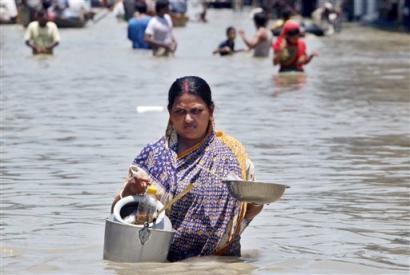
South Asia is facing the worst ever environment fury, with incessant rains, devastating storms, and destructive flooding risking life at par. To the dismay of the hundreds of thousands of the affected, improper disaster management measures have added to their trouble with many dying not because of the environment catastrophe, but for the lack of proper government assistance, depriving them of food, water, clothing and shelter.
Bihar, West Bengal, Assam, UP, Orissa in India fear devastation in the wake of persistent rains resulting in destructive flooding. Thousands have died, millions marooned. And the fear of outbreak of water-borne diseases like gastroenteritis, measles, dengue fever, cholera and skin ailments, along with food shortage is hurting millions of flood affected victims. Damage to the infrastructure like buildings, houses, offices, highways, railways seems beyond repair for years to come.
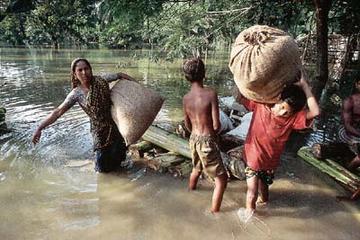
In Bangladesh, the scenario is grim with virtual breakdown of the disaster management system caused by incessant flooding for years. With more than 20 million affected with flooding and shortages of food supply, any kind of relief efforts seem negligible.
The situation in neighboring Himalayan kingdom of Nepal is no less worse.
The current appalling scenario is an offshoot of climate change, which is again an attribute of uncontrolled human activity leading to global warming. The prolonged and sumptuous monsoon in south Asia, unremitting rainfall in south-east Asia particularly China, Japan, and almost the rest of the world, Britain, U.S., South Africa is the result of global climate change.
Today, the world needs to ponder over what went wrong and where, and then formulate effective measures to control the ever-growing catastrophe of climate change.
Image1
Image2
Via: Reuters