

A seismic shift is underway in global medical tourism. For years, destinations competed through price, accreditation, and hospitality. Now they compete through intelligence. AI is reshaping every layer of the medical travel journey—from how patients discover clinics to how hospitals plan capacity, manage diagnostics, coordinate logistics, and continue post-treatment monitoring. With medical tourism projected to touch $150 Bn by 2033, the destinations embracing AI are building a new category of high-value assets: AI-enabled medical tourism ecosystems.
AI-Enhanced Patient Discovery: The New Global Front Door

The journey no longer starts with brochures or referrals. It starts with AI-driven discovery engines.
Platforms like DarwinAI tripled readership for the Medical Tourism Association to over one million users within nine months. Hospitals using advanced chatbots such as VirtualSpirits saw foreign-patient leads double within weeks, and inbound inquiries triple within a year.
This shift matters because 68% of medical tourists now rely on AI-powered sources and recommendation engines during their research phase. Destinations that surface the right content through intent-driven analytics become visible to global patients at the exact moment they are searching for solutions.
Read More: Designing Medical Tourism for Decision-Intelligent Patients
AI Triage and Eligibility: Faster Decisions, Safer Journeys

One of the biggest breakthroughs lies in AI’s ability to evaluate suitability long before a patient boards a plane.
- The Ada AI symptom checker demonstrated 99.5% condition coverage and 61.5% diagnostic accuracy, outperforming handwritten triage flows significantly .
- In emergency-triage simulations, AI tools cut waiting times by 54% and achieved 94.9% accuracy in high-acuity categories .
These numbers matter for medical tourism because inaccurate pre-arrival triage leads to wrong-fit cases, inflated costs, and emotional risk. AI creates a safer, faster pre-approval pipeline, enabling destinations to match patients to the right specialists with far greater clinical precision.
Read More: AI Chatbots in Healthcare Management
AI-Powered Coordination: Turning Complexity Into Seamlessness
Once a patient qualifies, the journey becomes logistical. Top destinations are now using AI systems that:
- Auto-generate complete itineraries based on medical history, budget, and recovery needs
- Recommend destinations based on climate suitability and post-operative comfort levels
- Handle visas, pre-authorisation, and insurance workflows simultaneously
- Sync schedules across hospitals, hotels, labs, transport, and recovery facilities
These GenAI concierges, capable of supporting over 280 languages with 95% translation accuracy through platforms like DeepL and Smartcat , eliminate one of the most dangerous friction points in cross-border healthcare: miscommunication.
Real-time interpretation tools integrated into EMRs ensure safe consent conversations, reducing risk for both hospitals and patients.
Smart Hospitals: Where Clinical Outcomes Become Destination Advantage

AI is no longer a side feature it is the core differentiator in modern medical travel.
In leading hubs like Thailand, Singapore, UAE, India, and Turkey:
- AI diagnostics deliver up to 90% accuracy in complex cases, dramatically improving international patient outcomes.
- Hospitals like Bumrungrad International analyze 100,000+ chest X-rays annually using AI systems such as Radiology INSIGHT CXR, boosting speed and accuracy for foreign patients requiring rapid diagnostics.
- Robotic surgery, especially the da Vinci system, enables minimally invasive procedures that shorten hospital stays and reduce cost burdens for medical tourists.
Combined, these systems create a new form of clinical certainty—a top reason 97% of medical tourists cite trust as the primary factor in selecting a provider .
Know More: Trust Triangle in Healthcare
AI Command Centers: The Engine Rooms of Destination Competitiveness

The future of medical tourism isn’t just smart hospitals—it’s smart ecosystems.
Turkey’s Acibadem network uses an AI command center that monitors patient flow, bed availability, deterioration signals, and safety alerts across multiple facilities in real time. The system can even detect unauthorized access to sensitive clinical areas using video analytics .
Destinations deploying such command centers:
- Reduce delays
- Prevent bottlenecks
- Improve turnaround times
- Increase international patient satisfaction
- Protect high-profile medical travelers
This is operational intelligence at a national scale, an asset class no traditional tourism infrastructure can match.
Read About: Digital Health Strategy for Organizations to Scale Globally
Digital Twins & AI Infrastructure: Designing Tomorrow’s Medical Districts
AI is influencing infrastructure before it even exists.
Digital twin technology helps destinations simulate:
- Seasonal patient surges
- Bed capacity
- Clinical workflow pressure points
- Emergency response logistics
- Resource utilisation
Children’s Mercy Kansas City used GE HealthCare’s Digital Twin to forecast RSV and flu surges, enabling the hospital to adjust bed allocations months in advance instead of years.
For medical tourism investors, this means new developments can be optimised for foreign-patient demand, not guesswork, turning infrastructure into an asset with predictable performance.
AI-Enabled Aftercare: The Revenue Layer Destinations Once Ignored
The medical tourism journey no longer ends with discharge.
Wearables and remote monitoring apps now stream real-time post-treatment data back to destination clinicians, improving patient safety and continuity of care .
AI-guided recovery programs are also emerging across borders:
- Sleep tracking
- Nutrition modeling
- Stress analytics
- Rehab coaching
- Medication adherence nudges
Remote care platforms report improvements such as stroke and ARDS outcomes enhanced by up to 30% using AI-supported monitoring. This creates a subscription-like aftercare model and a new revenue stream for destinations.
Read About: Guide to Planning Post Operative Care/Continuity of Care in Medical Tourism
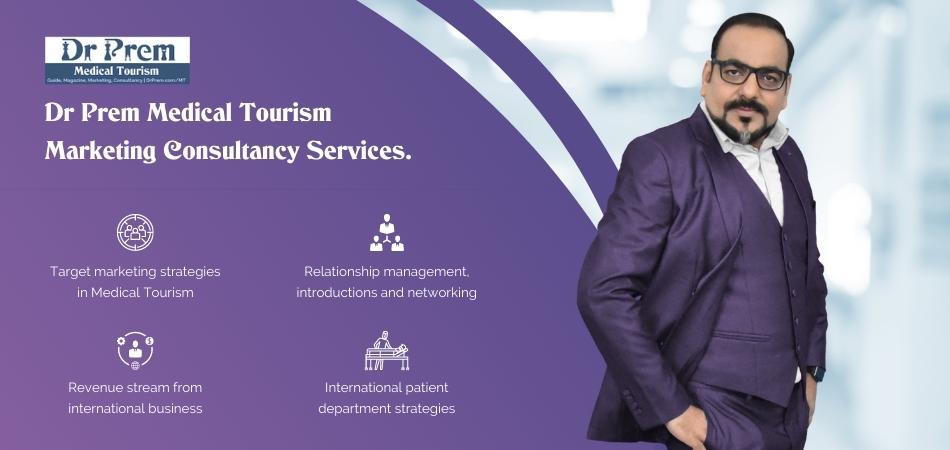
How Dr. Prem Helps Destinations Build AI-Powered Medical Tourism Assets
AI-driven medical tourism requires strategic alignment across hospitals, facilitators, insurers, regulators, and wellness partners. With over 25 years of consulting across 78 countries, Dr. Prem helps destinations create medical tourism ecosystems that are:
- AI-integrated
- Operationally intelligent
- Patient-centric
- Scalable and future-ready
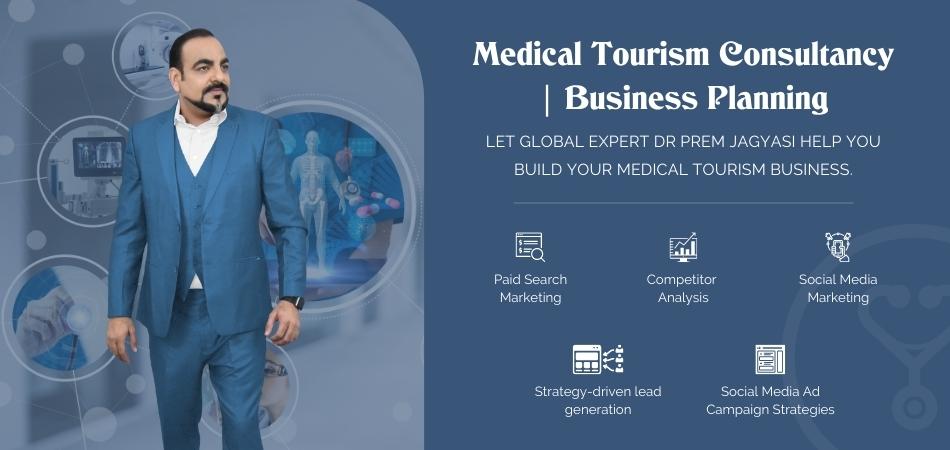
His expertise in medical tourism consultancy and AI-driven marketing spans national health tourism frameworks, cluster development, AI-enabled patient journey design, hospital transformation, digital competitiveness, and destination branding.
If your goal is to become a global leader in AI-enabled medical travel, Dr. Prem can help you turn technology into strategy and strategy into sustainable growth. Contact Dr Prem today.