

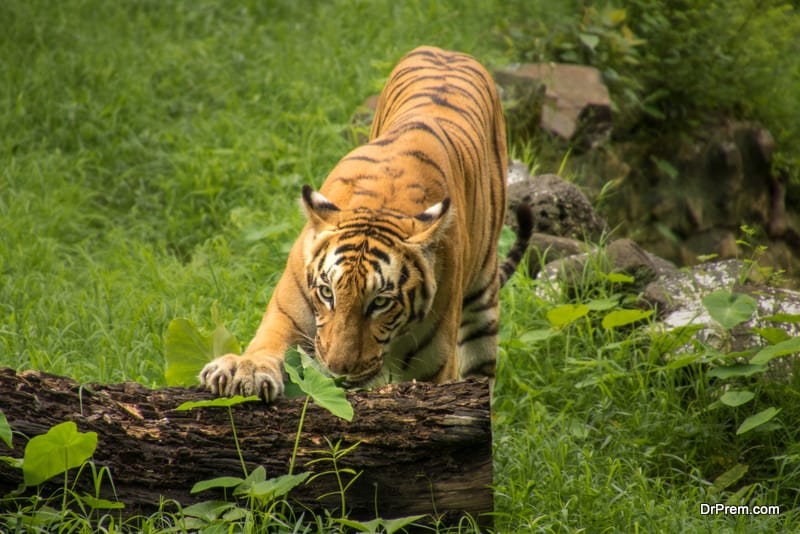
The latest tiger census is ready to send startling numbers of tigers in the country. The number is much less than earlier thought. What is the future of tigers in this country that is continuously showing a declining trend, thanks to the illegal trade in tiger parts going on? It is a cause of great concern that tiger is counting its days in the country that once boasted of the second largest tiger population.
In India, tiger inhabited areas mainly include central Indian states like Madhya Prdesh, Maharashtra, Rajasthan, and UP, and southern trijunction of Karnataka, Andhra Pradesh and Tamil Nadu. Apart from these, specific areas like the world famous Sunderbans and Jalpaigudi sanctuary in West Bengal, Similipal in Orissa and Manas on the Indo-Bhutanese places of habitation of Royal Bengal Tiger, the national animal in India.

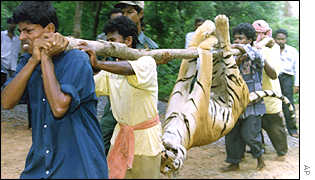
In spite of government’s project tiger program to save the tiger in the 28 tiger reserves of India, the number of tigers is dwindling. The biggest culprit being the illegal trade in tiger parts. Poaching of tigers for skin, hides, claws and bones is mainly prevalent because the tiger skin fetches hundreds of dollars in international market. The whole tiger body is used for medicinal purposes in many countries like China, therefore Indian tiger is in great demand. While in some cases, tiger skin is used as a decorative item.
Also, the decreasing limits of their habitats in the form of human dwellings, factories, and industries in place of forests is increasingly contributing in an indirect way to the dwindling tiger numbers. With their habitation becoming restricted, the tigers often infiltrate to man inhabited places, thereby becoming victims of the man-animal conflict. Recent times have been witness to such cruelty on the part of man leading to the decline of the tigers at many places.
The census puts the tiger numbers to a mere 1300, which is in itself a warning of times ahead.
There is an urgent need of strict regulations to control merciless poaching and smuggling in tiger parts.
Relentless development at the cost of the tiger is of no use. If the country fails to protect its natural heritage, the day is not far when our future generations will get to have a glimpse of the tiger in folktales. It is our bounden duty to save the tiger and protect our natural heritage, which if once lost will always remain an instant dream.
Via: Guardian Unlimited