
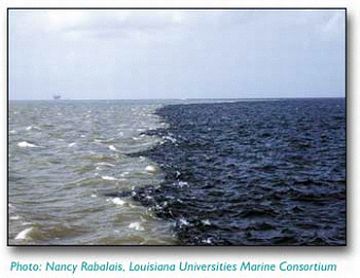
The marine ecosystem-rich Gulf of Mexico is being alarmingly bereft of its oxygen level, enough to suffocate its marine life to death.
Called the ‘dead zone’ in the Gulf, the low oxygen level water-swath is expanding its stretch to reach more than 8,500 square miles by the end of this year, if it continues to recur the way it is doing each year off the Texas and Louisiana coasts.
Ah! This is about the size of New Jersey! This expansion is nearly double the annual average since 1990 of 4,800 square miles.
But, the questions arise on how is it happening?
Fed by melted snow and spring flooding that occur along the Mississippi and Atchafalaya rivers, farm chemicals along with other runoff flow into the dead zone of the Gulf. This in turn, sucks up most of the region’s oxygen indirectly.
The nitrogen and phosphorus-rich runoff triggers the growth of algae. Settling and decaying in the Gulf’s bottom waters, these algae along with the bacteria that decompose them gobble the oxygen faster than what that is replenished from the surface.
This means lower levels of dissolved oxygen in the water giving birth to a ‘hypoxic area.’ This can hugely affect the Gulf of Mexico’s valuable fishery.
It is only the tropical storms that can help reduce or disrupt this increasing dead zone. The much-predicted active hurricane season for 2007 by NOAA, seems to be the only hope for the scientists this year.
Though devastating for life on land, it is a welcome phenomenon for the valuable marine species as can help destroy the suffocating marine ‘dead zone’.
Image