
A brochure can introduce a hospital. A FAM trip can prove whether the hospital is ready for international patients. Dr Prem Jagyasi believes hospital FAM trips are becoming one of the most practical trust-building tools in medical tourism because they allow buyers, facilitators, insurers, and healthcare leaders to see the patient journey before recommending it.
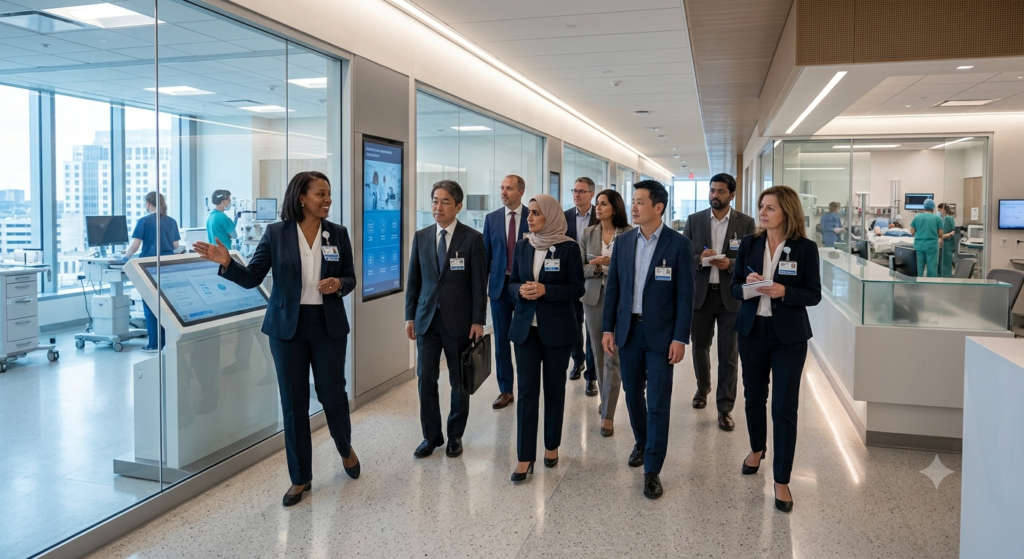
A medical tourism FAM trip is a structured hospital familiarization visit where international delegates assess patient flow, doctor access, safety systems, pricing transparency, family support, and aftercare readiness before recommending a provider. At the Mumbai Medical Tourism and Wellness Global Exchange 2026, expert delegates from 15 countries joined a hospital FAM trip as part of the wider exchange. The lesson was clear: in medical tourism, trust becomes stronger when it is seen, questioned, and understood in person.
Key takeaways
- Hospital FAM trips help medical tourism buyers evaluate patient flow, clinical access, communication quality, safety culture, and international patient readiness.
- The 15-country FAM trip during the Mumbai Medical Tourism and Wellness Global Exchange 2026 showed why hospital exposure must be part of serious B2B medical tourism.
- The future of medical tourism trust will depend on hospitals that can show their systems, not only describe their services.
Why do hospital FAM trips matter more in medical tourism than in normal travel?
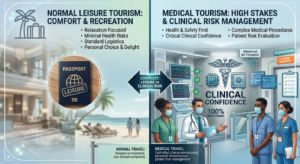
Hospital FAM trips matter more in medical tourism because the decision is not about leisure, comfort, or destination appeal alone. It is about health risk, family anxiety, clinical confidence, financial clarity, and recovery.
In tourism, a familiarization trip helps agents understand a hotel or destination. In medical tourism, a FAM trip helps international patient referral partners assess whether a hospital can receive, treat, guide, and support patients from another country.
That distinction matters. A medical tourism buyer may later influence a patient’s hospital choice, doctor preference, destination decision, and treatment timing. If that buyer has never seen the hospital, the recommendation is incomplete.
Dr Prem’s view is that many hospitals do not lose international patients because they lack capability. They lose them because overseas partners cannot confidently explain that capability to patients.
What did the 15-country Mumbai FAM trip demonstrate?
The Mumbai Medical Tourism and Wellness Global Exchange 2026 demonstrated that FAM trips are not side visits. They are trust infrastructure. Expert delegates from 15 countries observed hospital capability in a real setting, not only in a meeting room.
This matters because cross-border healthcare depends on transferred trust. Patients often trust the facilitator, doctor, employer, insurer, or advisor who guides them before they trust the hospital directly. When those partners experience a hospital first-hand, they can explain the patient journey with greater clarity.
The Mumbai FAM trip showed a practical lesson:
Hospital exposure creates stronger buyer confidence
- Delegates can observe infrastructure, coordination, and service culture.
- Hospital teams can explain systems that brochures usually simplify.
- Buyers can judge whether the hospital is suitable for their source market.
A strong FAM trip not only impresses delegates. It helps delegates ask sharper questions.
What is Dr Prem’s See-to-Trust FAM Framework?
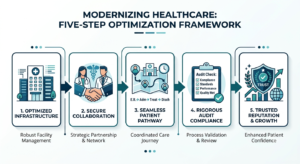
Dr Prem’s See-to-Trust FAM Framework explains how a hospital visit becomes a trust-building asset in medical tourism. It moves delegates from visual exposure to responsible recommendation.
| Stage | What delegates observe | Why it matters |
| See | Infrastructure, departments, rooms, technology | Confirms physical capability |
| Meet | Doctors, coordinators, international desk | Builds human confidence |
| Map | Inquiry, admission, discharge, aftercare | Tests patient journey readiness |
| Question | Pricing, risks, documents, escalation | Reveals operational clarity |
| Trust | Ability to recommend responsibly | Converts exposure into confidence |
The framework matters because many hospital tours remain superficial. Delegates are shown buildings, equipment, and rooms, but not the pathway an international patient actually follows.
Medical tourism trust is created when delegates understand what happens before arrival, during treatment, and after the patient returns home. A FAM trip should make that journey visible.
Why does seeing the hospital reduce medical tourism risk?
Seeing the hospital reduces perceived risk because medical travel is full of unknowns. Patients worry about doctor credibility, infection safety, language support, pricing surprises, family stay, complications, and follow-up care.
WHO’s Global Patient Safety Report 2024 presents patient safety as a global healthcare priority and reviews patient safety implementation across countries. For medical tourism, this makes visible safety processes more important.
A FAM trip gives delegates a chance to assess whether safety and service claims are supported by actual systems. They can ask how medical records are reviewed, how second opinions are handled, how complications are escalated, and how patients communicate after returning home.
Dr Prem’s expert perspective is direct: “In medical tourism, trust does not grow from what a hospital says about itself. Trust grows when the patient pathway can be seen, questioned, and explained.”
What should a hospital FAM trip checklist include?
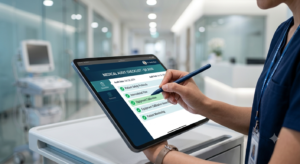
A hospital FAM trip checklist should focus on the international patient journey, not only infrastructure. The goal is to help delegates understand whether the hospital is ready for real cross-border care.
A serious hospital FAM trip should include
- International patient desk, inquiry handling, and medical record review.
- Doctor interaction, specialty strengths, pricing explanation, and consent process.
- Admission, discharge, family support, recovery planning, and aftercare.
Hospitals often make the mistake of showing what looks impressive. Delegates need to see what works under pressure: response time, coordination, cultural sensitivity, payment clarity, interpreter support, complaint handling, and post-return communication.
Global Healthcare Accreditation states that its medical travel certification helps organizations strengthen medical travel programs and sustain compliance with best practices in patient experience and business practices impacting the medical tourism patient. That is why the full patient journey should be central to every FAM visit.
How do FAM trips strengthen B2B medical tourism partnerships?
FAM trips strengthen B2B partnerships because both sides gain a shared reference point. After a hospital visit, conversations become more specific. Buyers can discuss case types, patient profiles, referral criteria, pricing expectations, and service gaps with better understanding.
This improves MoU quality. Instead of signing broad agreements after a meeting, partners can identify where the hospital is genuinely strong, which patients are suitable, and what source-market communication must be managed carefully.
The Medical Tourism Patient Survey 2024 reported that 97.2 percent of respondents considered trust in the healthcare provider important and 63.3 percent said accreditation influenced provider choice. These figures show why FAM trips must address credibility, quality signals, and financial transparency.
A well-designed FAM trip reduces mismatched expectations before referrals begin. It turns general interest into an informed partnership.
How should hospitals plan FAM trips for international delegates?
A medical tourism FAM trip should be planned like a trust audit, not a hospital walk-through with photo opportunities.
Planning should begin before delegates arrive. Hospitals should understand represented countries, specialties of interest, patient segments, cultural expectations, and likely referral concerns. This allows the visit to answer real market questions.
During the visit, every stop should answer a practical question. Can the hospital review records quickly? Can doctors explain treatment options clearly? Can families be supported? Can pricing be explained transparently? Can aftercare be managed after the patient returns home?
After the visit, the hospital should send a structured follow-up pack with specialty profiles, doctor introductions, inquiry formats, international patient protocols, escalation contacts, and referral guidelines.
The best FAM trip does not end at the hospital exit. It becomes the starting point for a disciplined partnership conversation.
Read Dr Prem’s International Patient Journey in Medical Tourism to understand patient flow, treatment access and procedure, journey clarity, and post-return communication.
How can hospitals measure whether a FAM trip worked?
Hospitals should measure FAM trips through trust conversion, not attendance. A successful FAM trip is not defined by how many delegates visited. It is defined by what changed after the visit.
Useful metrics include delegate feedback, qualified follow-up meetings, specialty-specific inquiries, referral protocols discussed, MoUs advanced, first cases initiated, and relationship quality after 30, 60, and 90 days.
Dr Prem estimates, based on cross-country field experience, that FAM trips create stronger partnership momentum when followed by a structured 90-day plan. Without follow-up, even a successful hospital visit can fade into goodwill.
Every hospital FAM trip should have a post-visit conversion sheet that tracks delegates, source markets, specialty interests, next steps, and relationship owners.
How can destinations use FAM trips as a medical tourism strategy?
Hospitals can use FAM trips to prove readiness for international patients. Tourism boards can use them to show destination-level credibility. Event organizers can use them to make B2B programs more outcome-oriented.
For destinations, the strongest FAM trips connect hospitals with hospitality, recovery, wellness, transport, interpretation, and patient support services. This is important because medical tourism is not only treatment. It is a complete care journey around the patient and family.
India’s medical and wellness tourism strategy highlights a broader medical value travel ecosystem that includes advanced medical infrastructure, AYUSH, digital facilitation, AYUSH Visa support, and regional medical hubs. A well-designed FAM trip can help international delegates experience that ecosystem directly.
The future model is clear. Hospitals should not use FAM trips merely to impress visitors. They should use them to create informed advocates, qualified partners, and safer patient referral corridors.
What is the future of FAM trips in medical tourism?
The future of FAM trips in medical tourism will be more structured, more evidence-led, and more connected to B2B outcomes. Delegates will expect more than a tour. They will expect proof of hospital readiness.
Hospitals that open their systems to serious observation will build stronger trust than hospitals that rely only on polished marketing material. Brochures can introduce a brand. FAM trips can reveal whether the brand is ready for real international patients.
That is the lesson from the 15-country expert delegation at the Mumbai Medical Tourism and Wellness Global Exchange 2026. In medical tourism, trust travels further when it has first been seen.
How can hospitals turn FAM trips into patient referral corridors?

A hospital FAM trip becomes commercially valuable only when it moves beyond hospitality. The strongest programs connect hospital readiness, buyer qualification, source-market priorities, clinical pathway transparency, and post-visit follow-up.
For hospitals, this means turning facility visits into structured international patient referral conversations. For tourism boards and ministries, it means building destination-level trust corridors where hospitals, recovery partners, wellness assets, transport, and patient support services work together.
Hospitals, clinics, tourism boards, and destination teams planning international FAM trips can use Dr Prem’s See-to-Trust FAM Framework to audit readiness, strengthen buyer confidence, and design medical tourism programs that convert visibility into trusted partnerships.
Discuss a Hospital FAM Trip Strategy With Dr Prem Jagyasi
Frequently asked questions
What is a medical tourism FAM trip?
A medical tourism FAM trip is a familiarization visit where international buyers, facilitators, insurers, healthcare leaders, or destination partners visit hospitals to assess services, systems, doctors, and the international patient journey.
How do FAM trips help hospitals get international patient referrals?
FAM trips help hospitals get international patient referrals by allowing partners to see the hospital before recommending it. This improves trust, reduces uncertainty, and helps buyers explain the patient journey more responsibly.
What should hospitals show during a FAM trip?
Hospitals should show the international patient desk, doctor access, specialty departments, patient flow, pricing process, consent pathway, discharge planning, family support, and aftercare communication.
What happened during the Mumbai medical tourism FAM trip in 2026?
During the Mumbai Medical Tourism and Wellness Global Exchange 2026, expert delegates from 15 countries joined a hospital FAM trip to experience hospital capability and understand patient journey readiness directly.
How can tourism boards use FAM trips to grow medical tourism?
Tourism boards can use FAM trips to show the complete medical value travel ecosystem, including hospitals, recovery support, wellness assets, transport, hospitality, and patient assistance.
About the author
Dr Prem Jagyasi is a global medical tourism, wellness tourism and healthcare strategist. He brings 25+ years of experience, has advised across 80 countries, and has trained 112,000+ professionals in healthcare, medical tourism, wellness tourism, and destination development.