
When Hitler visited Italy before World War II, in order to hide the impoverished condition of his country, Mussolini constructed fake cardboard walls around the railway tracks. Mussolini was an outspoken fascist and so was Hitler, so all this wasn’t a big deal for them. However, with the impending visit of US president Donald Trump to India, The Prime Minister of India Narendra Modi is acting in a way similar to Mussolini. He is constructing walls around the slums of Ahmedabad in order to hide them from Trump. He is behaving in a way characteristic of fascists making the country appear good just to show that it is progressing under his rule.
Curiously enough, both the current government of India and US have been constantly getting accusations for behaving in a fascistic manner, accusations that they have silently denied. But, when we call such governments fascist, don’t we exaggerate a little? Aren’t fascists supposed to be dictators and mass murderers? Well, not exactly. Fascism is a very broad term that might include a lot of grey shades as well. Owing to the success of all the fascist rules in the past, fascism has proved itself as a successful business model. It is all about putting up a false front making people believe that the government is acting on the interests of the people, while the people are actually acting on the interests of the government. The fascist governments of 21st Century are extremely hypocritical.
However, despite the extreme manipulation, there are certain signs of a fascist government that remain the same. The leaders certainly come up with a different propaganda everywhere, but they can’t change the basic pattern of fascism (or else it won’t work). So, let us take a look at what are these major characteristics of a fascist government.
5 Signs of a Fascist government
1.There’s always a scapegoat (or enemy of the state/public/religion/nation)
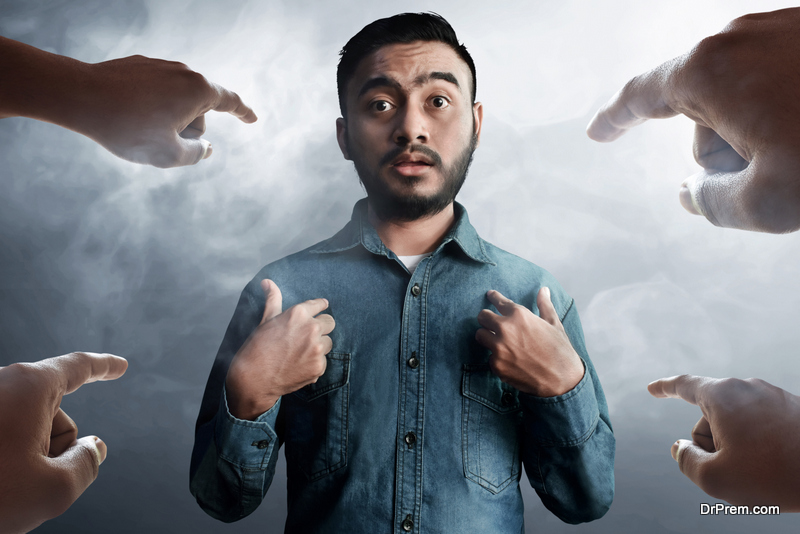 A great part of our intellect is devoted to differentiating between the good and the evil. But the world actually isn’t good or evil. We are simply taught to see certain things as good and certain things as evil. Instinctively, we tend to see what is similar to us as good, and what is different from us as bad. However, there’s nothing that could charge people more than the belief that they are represent the good and they are fighting against the evil. As a matter of fact, even terrorists have the same conviction.
So, the government cannot have a massive following unless they fully exploit this human impulse. They have to direct the focus on the people on certain scapegoat, which they would denounce as the ‘enemy of the state’ or ‘enemy of the religion’, and which must be a minority community, as otherwise the government would be overthrown.
Jews: The Scapegoats of 20th Century
Back in the late 19th and Early 20th Century, the universal scapegoats were the Jews. The fascist governments blamed them for everything ranging from recession and poverty to corruption, fornication and even setting up immoral businesses. In reality, Jews just had a singular easily identifiable culture that the other people didn’t know about. It was easy for them to put a tag of ‘evil’ on the Jews. This wasn’t that much of a problem until the governments started exploiting this for political gains. It wasn’t just one of the main reasons behind the rise of Nazis, to copy Hitler, even Mussolini included Anti-Semitism as a part of his propaganda. This worked for the politicians, but not for the people. More than six million Jews died during the holocaust.
The Scapegoats of 21st Century?
Throughout the ages, one of the only large communities that still retain a singular identity are Muslims. This makes them prime scape goats, especially in the country where they have a sizeable community, but are still in minority. Just like the Jews, the Muslims are given tags by the 21st Century fascists. They are called terrorists, lechers, thieves, and what not. Fascists breed on the ongoing islamophobia, and also supports and fuels it. The other scapegoats of the 21st Century include, immigrants, refugees, and people of different or mixed race. Since religion isn’t a major identity factor among the people nowadays, they are made proud of their originality, their noble descent, whereas the scapegoats are generally painted as inferiors and intruders.
Why the scapegoat?
Now the question arises, ‘Why the scapegoat?’. Can’t the government act on its own interests without bringing out a scapegoat? Strange as it might seem, they can’t. In a democratic country, people want the government to work on their i.e. the people’s interests. If the government fails to do that, it won’t get elected again. So, the government has two choices, either they have to gain a supreme control over the nation’s army and brutally suppress anyone who stands against their interests, or by bringing a scapegoat they can simply divert the attention of the public and do whatever they want.
2. War Mongering
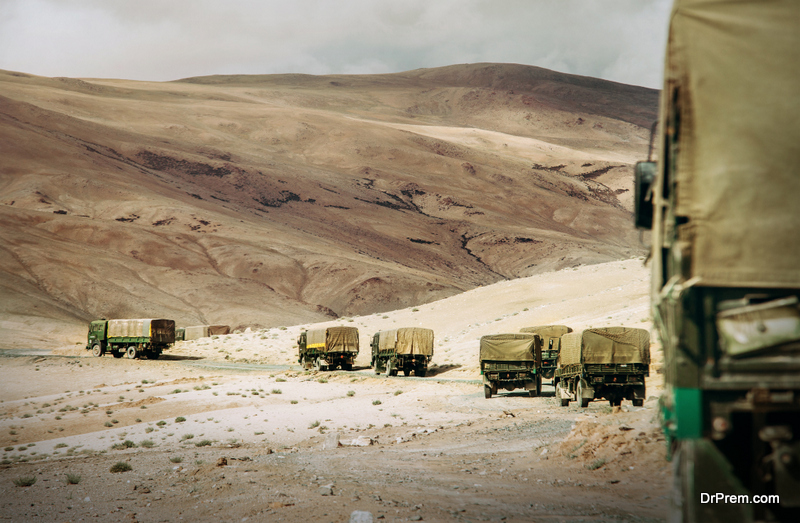 This is the second step to gaining complete access over the thinking of the people. When a country is engaged in war or is even contemplating it in the near or distant future,then that’s a major distraction for the people. People just stand glued to their TV sets or newspapers, and give enough space to the government to do whatever they like without being questioned for it.
War gives a chance to people to identify with their nation and their leaders. It even makes people easily give up their rights and duties, as they think that they are doing that in the interests of the nation. They would even put up with recession, unemployment, and all sorts of difficulties, which they might have to face because of the government’s lack of interest in their affairs.
Furthermore, war mongering gives the fascist government immediate and extreme power. They can easily track down, imprison, and even eliminate the people that are opposing their interests. They can do this without any prejudice as they would appear to be acting on national interests. War is of an extreme importance for a fascist government, and they use it at will to divert the attention of the public from the other important issues.
3. Controlled Mass Media
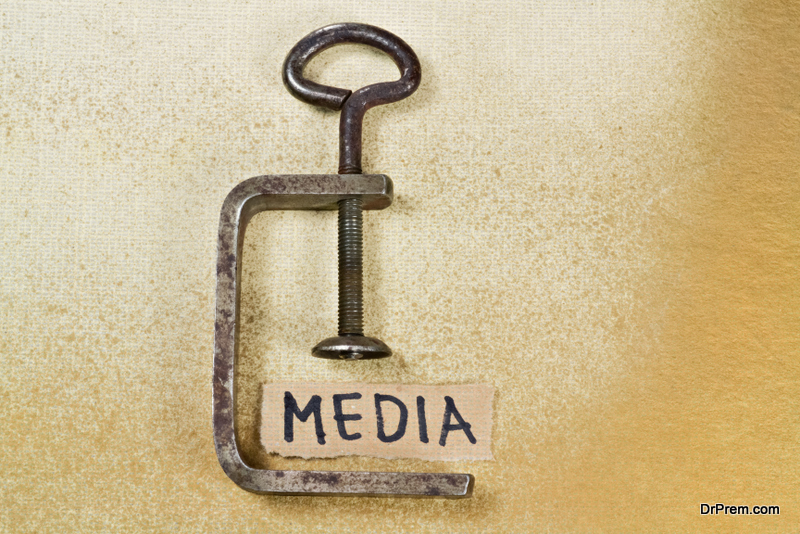 When acting on its own interests, the media would expose the government’s social interests within a short time. So, it is extremely important for the fascist government to have as much of control on the media they can. Even if they are able to have control over the majority of the media outlets, they can denounce the minority as being in league with the enemy of the state or the scapegoat. In 21st Century this would include a great control over social media as well.
As the government slowly begins to exercise more and more control over the nation, they use it to simply eliminate the opposing voices in the media. The media outlets that get promoted during the fascist regime are the ones that extend the propaganda of the government and simply act as their advertising portals.
4. The government becomes the nation
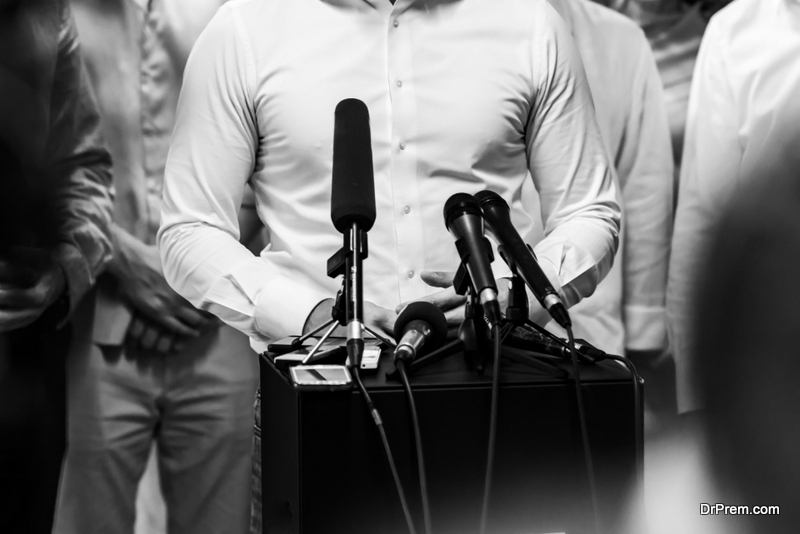 To avoid any sort of questionability, the fascist governments try their best to give a mythical status to themselves. The media helps them immensely with this. They portray the leaders like demi-gods, emphatically hiding their faults and praising them endlessly. According to them, not only their leaders are faultless, they are also incapable of having any fault. The people, thus manipulated, lose any democratic ideas that they might be having earlier. They think of their leaders as gods or kings, who aren’t liable to answer for anything and who can’t be questioned either.
In particular,both the media and the government stress the idea of a ‘nation’ and the nation’s leaders as the purest representatives of it. The media feeds this into the minds of people that to say anything against the leaders of the nation would be similar to saying something against the nation, and one who says something against the nation doesn’t deserve to live in it. This gives the government all the rights to act in its own interest as long as they pretend to be doing everything for the betterment of the nation (but not its people).
5. Everything hides behind a face
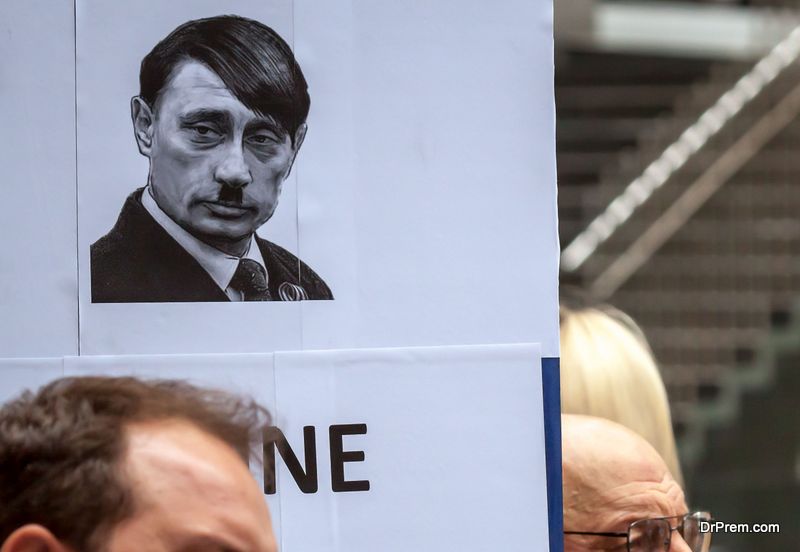 A fascist government rarely identifies itself as a party, as parties consist of multitude of people, and cannot be trusted. Thus, the fascist parties hide behind a face, be it the face of Hitler or the face of Mussolini. The face of the leader represents everything that masses of the particular country want their leader to be. And in the form of constant mention in the press, and in posters and advertisements, the face is literally everywhere. Nevertheless, the person who owns the face i.e. the leader himself is surprisingly distant. This just adds a sense of mystery to the person backing up people’s ideas about the leader as some mythological figure. In reality, however, both the leader and the party are simply acting on their self-interests fooling the country’s citizens with an almost ancient trick, and some how always succeeding with it.