
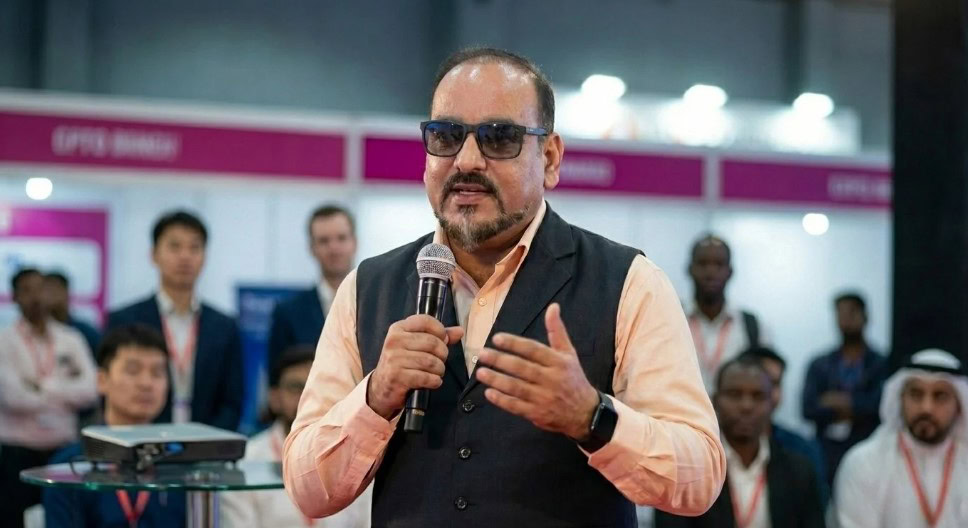
Another year at ITB Berlin. The same global stage, but a rapidly changing industry.
From 3–5 March 2026, leaders across tourism, healthcare, technology, and policy gathered in Berlin to debate the forces reshaping global travel. Artificial intelligence, longevity science, geopolitical tensions, and inclusive tourism are redefining how destinations compete and how travelers choose where to go.
For Dr Prem Jagyasi, ITB Berlin has never been just another conference. Over the years, he has contributed as a speaker, moderator, interviewer, and connector across the tourism and health sectors. At ITB Berlin 2026, his participation expanded again, shaping discussions on medical tourism strategy, longevity-driven health travel, and the evolving economics of inclusive tourism.
Across panels and interviews, a common theme emerged: trust is becoming the defining currency of global tourism.
Dr Prem Presents: Redefining Medical Tourism in the AI Era
Medical tourism is entering a new credibility battle.
At ITB Berlin 2026, Dr Prem presented “Redefining Medical Tourism in the AI Era: The Battle of Promises, Perceptions, Expectations, and Experiences.” The session examined how artificial intelligence is reshaping patients’ search, comparison, and decision-making.
Today, patients encounter hospitals through AI summaries, review patterns, recommendation engines, and automated search results before any clinical conversation begins. That changes where trust forms and who shapes it.
The industry is failing at one critical point. It still markets medical travel through polished promises while patients now arrive with AI-shaped perceptions. Those perceptions quickly become expectations around speed, certainty, cost, hospitality, and recovery.
That is where the gap opens.
The digital journey suggests precision. The real journey still contains delays, ambiguity, handoffs, emotional anxiety, and clinical variability. When experience fails to match algorithmically amplified expectations, trust weakens faster than reputations can recover.
According to Dr Prem, AI should strengthen coordination, clarity, and continuity. It should never inflate certainty. Medical tourism must move from promotional storytelling to measurable trust systems where human oversight, transparent communication, and verifiable patient experience define credibility.
Technology will shape the sector. Consistent experiences will decide who leads it.
Dr Prem Interviews Patrick Torrent on Barcelona Medical Destination
From AI-driven healthcare trends, the conversation shifted to destination strategy.
In an interview session, Dr Prem Jagyasi engaged Patrick Torrent, Executive Director of the Catalan Tourist Board, on the vision behind Barcelona Medical Destination.
Catalonia is globally recognized for cultural tourism and healthcare excellence. The discussion examined how these strengths position Barcelona as a competitive medical tourism hub.
Dr Prem moved the dialogue beyond promotion. His questions focused on governance structures and institutional collaboration that make Barcelona Medical Destination more than a marketing platform.
In an era of misinformation and rising patient skepticism, destinations must build credibility before patients travel. Transparent healthcare information, coordinated hospital networks, and collaboration between tourism authorities and healthcare institutions are essential.
The conversation also highlighted specialization. Rather than competing across every specialty, Barcelona focuses on areas where clinical excellence and research leadership already exist.
The takeaway was clear. Successful medical tourism destinations grow through structured healthcare ecosystems and long-term patient relationships.
Health Tourism Beyond Trends: Building Trust-Based Longevity Relationships
Health tourism is shifting from episodic care toward longitudinal health management, where prevention, longevity science, and continuous data tracking reshape international patient relationships.
At ITB Berlin 2026, Dr Prem moderated the panel “Health Tourism Moves Beyond Trends Toward Trust-Based Longevity Relationships.”
Panelists included Ivan Rendulic (ZagrebMed), Yana Sandberg (biome.clinic), Antonio Palumo (Sant’Angelo Resort & Spa), and Dr Kemal Aydin ( Founder and CEO, World Longevity Forum).
The discussion highlighted how longevity diagnostics and monitoring are redefining global health travel. Demand for preventive longevity care is rising rapidly. Wellness tourism alone is projected to expand from $651 billion in 2022 to nearly $1.4 trillion by 2027, while the global population aged sixty-five and above is expected to reach 1.5 billion by 2050.
Yet the panel raised a strategic concern. Longevity therapies, regenerative medicine, and biohacking programs are expanding faster than regulatory frameworks and scientific validation.
The future of longevity tourism will depend on one principle: measurable outcomes must replace aspirational promises if destinations expect to earn sustained patient trust.
Leading Global Conversations on LGBTQ+ Tourism at ITB Berlin
The LGBTQ+ Stage at ITB Berlin has evolved into a strategic forum where tourism economics, corporate strategy, and public policy intersect.
Across several panels, Dr Prem moderated discussions examining how inclusion increasingly shapes destination competitiveness and traveler trust.
The session “From Values to Value: Why Inclusive Tourism Is a Growth Strategy in 2026” featured Edgar Weggelaar (Queer Destinations), Benedikt Brandmeier (CEO, Munich Tourism), and Shiho Ikeuchi (General Manager, Ace Hotel Kyoto). The conversation framed inclusion as a measurable economic lever.
Global LGBTQ+ travel spending exceeds USD 218 billion, while research shows 73% of underserved travelers are more likely to return to brands demonstrating visible diversity commitments. Inclusion therefore influences loyalty, reputation, and destination positioning.
Another panel, “When Politics Hit Profit & Loss: The New Cost of Visibility,” brought together Jens Schadendorf (Economist, Author of Gayme Changer), Seth Barron (Director, Grindr), Aalap Shah (Head of Partnership Development, QueerVadis), and Alejandro Villalobos (Head of Creatives, Queer Destinations).
The discussion examined how corporate visibility increasingly carries commercial consequences. Research shows 60% of consumers now choose or avoid brands based on political positions, turning inclusion into a strategic business decision rather than a marketing message.
The debate deepened in “LGBTQ+ Culture Travels Faster Than Policy.” Philipp Kaste (Speaker, LGBTQ+ Network Queersite, AxelSpringer SE), Marcel Conrad (Deputy Chief Content Officer, A3M Global Monitoring), Michaela Dudley (JD Publicist, Cabaret Artist, Juris Dr., diva-in-diversity.com), and Auston Matta (CEO & Co-Founder, TwoBadTourists,) explored a widening global gap.
Cultural visibility is expanding through media and travel, yet legal protections remain uneven. Current data shows 64 UN member states still criminalize same-sex relationships, illustrating how tourism visibility can outpace regulatory frameworks.
The discussion concluded with “Pride Economics: Who Pays, Who Benefits, Who Gets Blamed?” featuring Andreas Audretsch (BundestagDeputy Parliamentary Group Chair of Bündnis 90/Die Grünen in the German) and Karl Krause (Co-Founder & Content Creator/Blogger, Couple of Men, coupleofmen.com). Pride events now generate major tourism value. Pride Toronto 2024 attracted about 3.1 million attendees and contributed nearly CAD 473 million to GDP.
Yet the panel raised a harder question: when Pride becomes a powerful economic engine, who carries responsibility when commercialization overshadows community interests or corporate support withdraws under political pressure?
Dr Prem also joined “From Risks to Resilience: Practical Steps for Inclusive LGBTQ+ Travel in the Future,” moderated by Thomas Bömkes, MD of Diversity Tourism. Alongside Marcel Conrad (Deputy Chief Content Officer, A3M Global Monitoring), Carlota Galván (Head of Environment, Social & Governance, Head of Global Health & Safety Strategy, HBX Group (Hotelbeds), and Seth Barron, the session examined safety frameworks, risk intelligence, and misinformation affecting LGBTQ+ travelers.
Across these discussions, one insight emerged strongly. Inclusive tourism is becoming a strategic test of destination credibility, where visibility, safety, and authenticity increasingly determine traveler trust and long-term competitiveness.
Closing Reflections from ITB Berlin 2026
As ITB Berlin 2026 concluded, one message stood out: tourism is entering a decisive decade shaped by AI, longevity, and inclusion. Dr Prem Jagyasi expressed sincere gratitude to the organizers, especially to his long-time friend Thomas Bömkes, for curating meaningful conversations.
The takeaway: the future of travel will be built on trust, inclusion, and human connection.

