Wellness Resort Branding, Marketing, and Revenue Growth Consulting for Global Wellness Destinations.
Strategic positioning, demand generation, and revenue systems that convert wellness vision into sustained commercial performance
Wellness resorts do not fail because of facilities. They fail because of weak positioning, unclear messaging, and fragile revenue models. Dr Prem delivers global wellness resort branding, marketing, and revenue growth consulting designed to build trust-driven demand, pricing power, and long-term commercial resilience.
With over 25 years of experience across 80 countries, Dr Prem has advised wellness resorts, luxury wellness destinations, and retreat-led hospitality projects on how to position correctly, attract the right guests, and convert interest into high-value bookings. His work focuses on aligning brand promise with wellness experience, structuring program-led revenue models, and deploying authority-driven marketing systems rather than discount-led tactics.
The objective is not short-term visibility, but sustainable demand, predictable revenue, and stronger asset valuation across market cycles.
25+ years global wellness resort consulting experience
Branding and revenue strategies applied across 80 countries
Times Award–winning wellness and tourism expert
Proven across luxury, premium, and nature-led wellness models
Dr Prem Wellness Resort Consulting is a globally recognized advisory practice specializing in wellness resort planning, strategy, marketing, and development. Led by Times Award–winning wellness expert Dr Prem Jagyasi, the consultancy brings over 25 years of experience advising wellness and luxury resort projects across 80 countries.
Dr Prem is known internationally for delivering results-driven consulting that helps wellness resorts achieve stronger positioning, higher guest engagement, and sustainable profitability. His work spans luxury wellness resorts, premium lifestyle retreats, nature-led and vernacular destinations, and medical wellness projects across diverse markets.
Each engagement is highly customized, drawing on global best practices, regional market insight, and real-world execution experience. The focus remains on building wellness resorts that perform consistently, attract the right guests, and create long-term value for owners and investors.
Wellness Resort Brand Strategy and Market Positioning for Differentiation and Pricing Power
Brand positioning determines how a wellness resort is perceived, priced, and remembered. This block defines a clear and defensible brand strategy that differentiates the resort from generic spa hotels and wellness imitators. Positioning decisions are anchored in wellness philosophy, target guest psychology, and competitive context.
Rather than visual branding alone, this work defines the strategic promise the resort makes and can consistently deliver. Strong positioning reduces price sensitivity, improves trust, and increases booking conversion.
Key Focus Areas
Poor positioning forces discounting within 18–24 months of opening
Aligns brand promise with actual wellness experience delivered
Differentiates luxury, premium, and nature-led wellness models
Prevents mixed messaging that confuses guests and weakens trust
Authority-Led Wellness Resort Marketing and Demand Generation Systems
Wellness resorts require trust-driven marketing, not volume-led promotion. This block structures marketing systems that build authority, credibility, and demand quality rather than reliance on OTAs or paid advertising. It focuses on content authority, partnerships, reputation management, and narrative clarity.
Marketing systems are designed to attract guests aligned with the resort’s wellness philosophy and program depth, improving conversion and retention.
Key Focus Areas
Authority-led marketing reduces customer acquisition cost by 25–45 percent
OTA-heavy dependence compresses margins and weakens brand control
Trust-driven narratives improve enquiry quality and conversion
Builds long-term demand rather than short-term spikes
AI-Enabled Marketing Funnels and Sales Conversion Optimization for Wellness Resorts
AI systems are increasingly central to wellness resort marketing and sales performance. This block integrates AI-enabled funnels, CRM systems, and data-driven personalization to improve enquiry handling, conversion rates, and follow-up effectiveness.
The focus is practical deployment, not technology for its own sake. AI tools are selected to support wellness-specific sales cycles, longer decision windows, and higher-value bookings.
Key Focus Areas
AI-enabled funnels increase qualified wellness enquiries by 2–5x
Automated follow-up improves enquiry-to-booking conversion by 15–35 percent
Reduces dependence on manual sales processes
Improves response speed and personalization
Prevents lead leakage and revenue loss
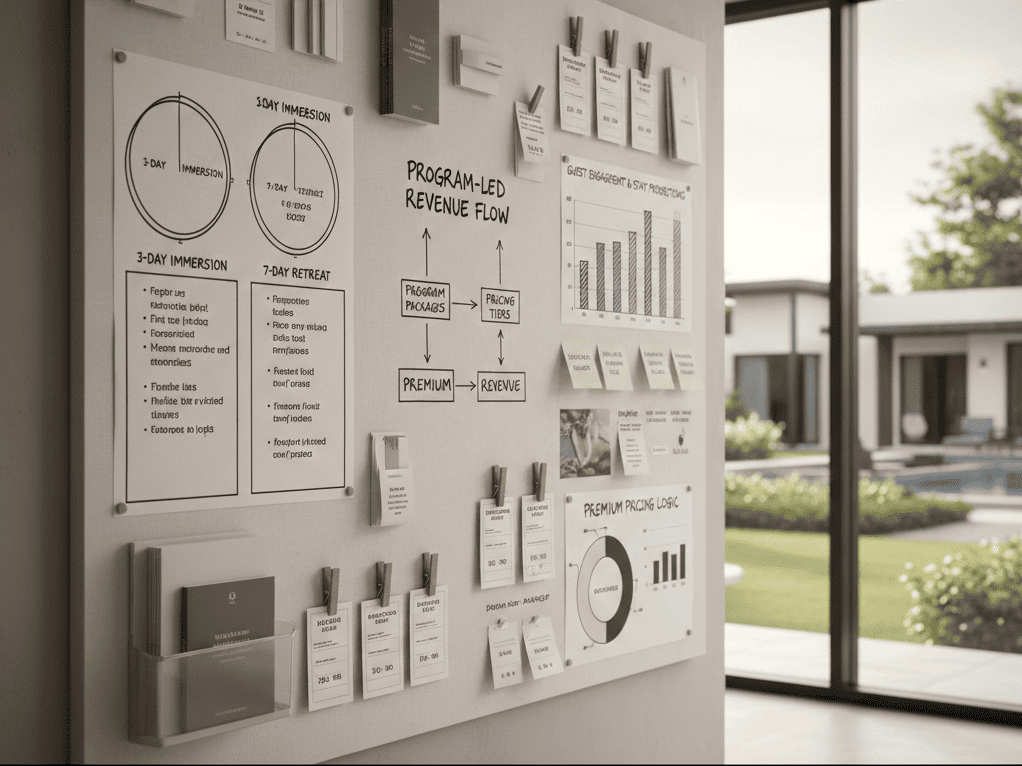
Revenue Model Design and Program-Led Pricing Strategy for Wellness Resorts
Revenue growth in wellness resorts comes from structure, not volume. This block designs program-led revenue models that increase length of stay, average spend, and predictability of income. Pricing strategies are aligned with perceived value, outcomes, and guest transformation rather than room rates alone.
The approach shifts revenue dependence away from volatile occupancy and toward wellness programs, retreats, and long-stay formats.
Wellness Retail, Partnerships, and Ancillary Revenue Expansion Strategy
Ancillary revenue enhances both guest experience and financial performance when planned strategically. This block focuses on wellness retail, partnerships, and post-stay engagement models that extend revenue beyond accommodation and therapies.
Retail and partnerships are aligned with wellness programs, guest outcomes, and brand positioning to avoid inventory risk and brand dilution.
Key Focus Areas
Wellness retail contributes 3–10 percent incremental revenue when structured
Poor retail planning results in 40–60 percent slow-moving inventory
What is wellness resort branding and why is it important?
Wellness resort branding defines how your resort is perceived, trusted, and remembered in the market. Strong branding improves pricing power, guest trust, and booking conversions by clearly communicating your wellness promise.
How is wellness resort marketing different from hotel marketing?
Wellness resort marketing is trust-driven and outcome-focused, relying on authority, content, and credibility rather than discounts, OTAs, or mass promotions used in traditional hotel marketing.
Why do wellness resorts fail in marketing and branding?
Most wellness resorts fail due to weak positioning, unclear messaging, and poor revenue strategy—not because of infrastructure or facilities.
What is brand positioning in a wellness resort?
Brand positioning defines how your resort stands out in the market, who it attracts, and how it is priced. It aligns wellness philosophy, guest psychology, and experience delivery into a clear, differentiated identity.
How can a wellness resort increase its booking conversions?
By improving brand clarity, building trust-driven marketing, and aligning messaging with real wellness outcomes, resorts can increase booking conversions by 20–40%.
What is authority-led marketing for wellness resorts?
Authority-led marketing builds credibility through expert content, partnerships, and reputation rather than relying on paid ads. This approach attracts high-quality guests and reduces customer acquisition costs.
How can wellness resorts reduce dependency on OTAs?
By building direct demand through branding, content marketing, partnerships, and AI-driven funnels, resorts can reduce reliance on OTAs and protect their margins.
What role does AI play in wellness resort marketing?
AI helps automate lead handling, improve personalization, and increase enquiry-to-booking conversions by 15–35% through smarter follow-ups and data-driven marketing systems.
What are AI-enabled marketing funnels in wellness resorts?
AI-enabled funnels use CRM systems, automation, and personalization to guide potential guests from enquiry to booking, improving efficiency and reducing lead leakage.
How do wellness resorts generate higher revenue per guest?
Through structured wellness programs, packages, and longer stays, resorts can increase guest spending and generate 25–45% additional revenue beyond room income.
What is program-led pricing in wellness resorts?
Program-led pricing focuses on selling structured wellness experiences (like retreats and packages) instead of just rooms, improving revenue predictability and guest outcomes.
How can a wellness resort improve customer acquisition cost (CAC)?
By using authority-led marketing and trust-driven strategies, resorts can reduce CAC by 25–45% compared to traditional advertising-heavy approaches.
What are ancillary revenue streams in wellness resorts?
Ancillary revenue includes wellness retail, partnerships, and post-stay engagement models that generate additional income beyond accommodation and therapies.
How much revenue can wellness retail generate?
When planned correctly, wellness retail can contribute 3–10% additional revenue, while poor planning can lead to high levels of unsold inventory.
How do partnerships help wellness resorts grow revenue?
Strategic partnerships expand reach, enhance credibility, and create additional revenue streams while strengthening brand positioning and guest trust.
What is the goal of wellness resort marketing and revenue consulting?
The goal is to build sustainable demand, predictable revenue, and long-term asset value—not just short-term visibility or bookings.