Wellness Resort Case Studies, Success Stories, and ROI Performance Across Global Markets
Validated outcomes, investment performance, and real-world execution results from wellness resort projects worldwide
Wellness resorts are capital-intensive assets. Credibility is built not through promises, but through outcomes delivered across different markets, models, and investment structures. Dr Prem’s wellness resort consulting work spans greenfield developments, resort-to-wellness conversions, luxury wellness destinations, medical wellness integrations, and retreat-led micro models across global markets.
Over 25+ years and 80 countries, Dr Prem has advised projects ranging from humble boutique wellness resorts to advanced medical wellness and ultra-luxury longevity destinations. The results reflect consistent patterns: stronger occupancy, longer stays, higher wellness revenue contribution, improved marketing efficiency, and clearer investment visibility.
These case studies represent consolidated learnings, industry-aligned benchmarks, and outcome-driven execution frameworks applied across multiple projects. Client identities and sensitive data are protected, but the commercial and operational results demonstrate what is achievable when wellness strategy, execution discipline, and revenue logic are aligned from the start .
25+ years global wellness resort consulting experience
Case work and advisory across 80 countries
Outcomes delivered across boutique, advanced, and luxury models
Benchmarks aligned with global wellness resort performance data
Dr Prem Wellness Resort Consultancy is a globally recognized advisory practice specializing in wellness resort planning, strategy, marketing, and development. Led by Times Award–winning wellness expert Dr Prem Jagyasi, the consultancy brings over 25 years of experience advising wellness and luxury resort projects across 80 countries.
Dr Prem is known internationally for delivering results-driven consulting that helps wellness resorts achieve stronger positioning, higher guest engagement, and sustainable profitability. His work spans luxury wellness resorts, premium lifestyle retreats, nature-led and vernacular destinations, and medical wellness projects across diverse markets.
Each engagement is highly customized, drawing on global best practices, regional market insight, and real-world execution experience. The focus remains on building wellness resorts that perform consistently, attract the right guests, and create long-term value for owners and investors.
Wellness resorts outperform traditional leisure resorts due to higher guest value, longer stays, and stronger on-site revenue capture. Global benchmarks show that wellness travelers spend significantly more per trip and remain on property longer, creating superior revenue density and operational leverage.
Program-led wellness models convert accommodation demand into holistic experiences, increasing wellness attach rates and reducing reliance on external demand channels. These dynamics create more predictable revenue streams and stronger long-term asset performance.
Key Focus Areas
Wellness travelers spend 35–55 percent more per trip than leisure guests
Typical stays extend from 5–14 nights, medical wellness up to 28 nights
On-site wellness spend per room reaches 1.5x–3.0x leisure resorts
Higher engagement improves repeat and referral contribution
Stronger revenue density supports long-term asset valuation
Greenfield Wellness Resort Development Outcomes Across Boutique and Scalable Models
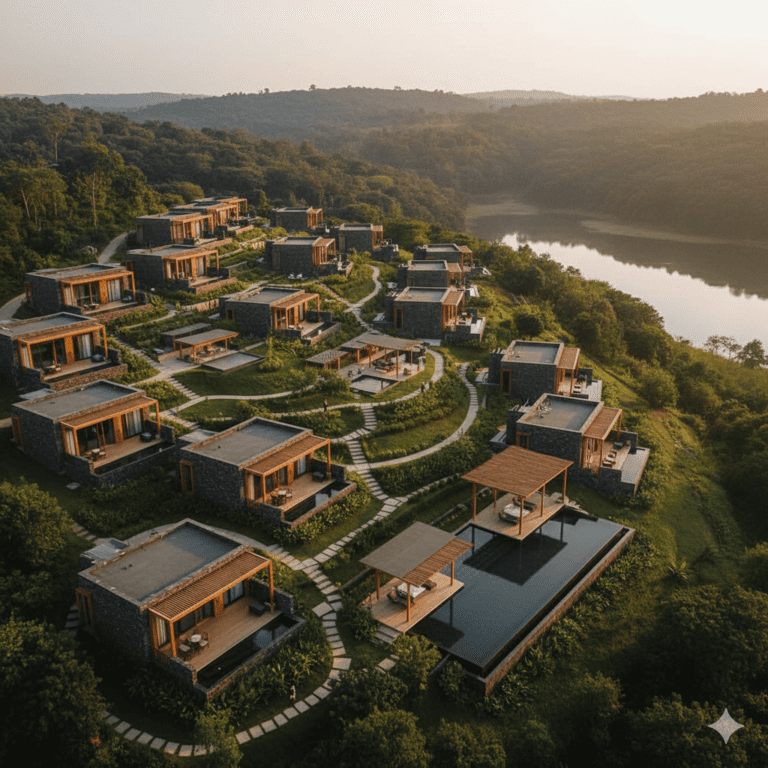
Greenfield wellness resorts, when planned correctly, achieve strong stabilization performance even with modest room counts. Case work across boutique and scalable models shows that lean construction, retreat-led operations, and phased growth deliver faster payback and controlled risk exposure.
Projects ranging from 20 to 40 keys demonstrate that wellness-led design and program architecture outperform room-led hospitality economics, particularly in nature-led and vernacular settings.
Key Focus Areas
Capex ranges INR 22–48 lakh per key for boutique wellness models
Stabilized occupancy typically 55–75 percent
EBITDA margins range 25–40 percent post-stabilization
Payback achieved within 3.5–6.5 years in execution-led models
Retreat-led operations improve utilization and pricing discipline
Resort-to-Wellness Conversion and Scale-Up Success Across Brownfield Assets
Resort-to-wellness conversion represents one of the fastest paths to improving asset performance. Case studies demonstrate that adding structured wellness facilities, programs, and positioning layers can materially improve occupancy, revenue mix, and marketing efficiency without full redevelopment.
Phased conversion strategies reduce capital risk while accelerating stabilization compared to conventional repositioning.
Key Focus Areas
Occupancy uplifts of 10–30 percentage points post wellness integration
Total revenue growth of 45–65 percent observed after conversion
Wellness revenue share increases from low single digits to 20–25 percent
Marketing spend reduced by 25–40 percent through direct demand
Faster stabilization versus full-scale redevelopment models
Advanced, Medical, and Luxury Wellness Models With Higher Capex and Longer Horizons
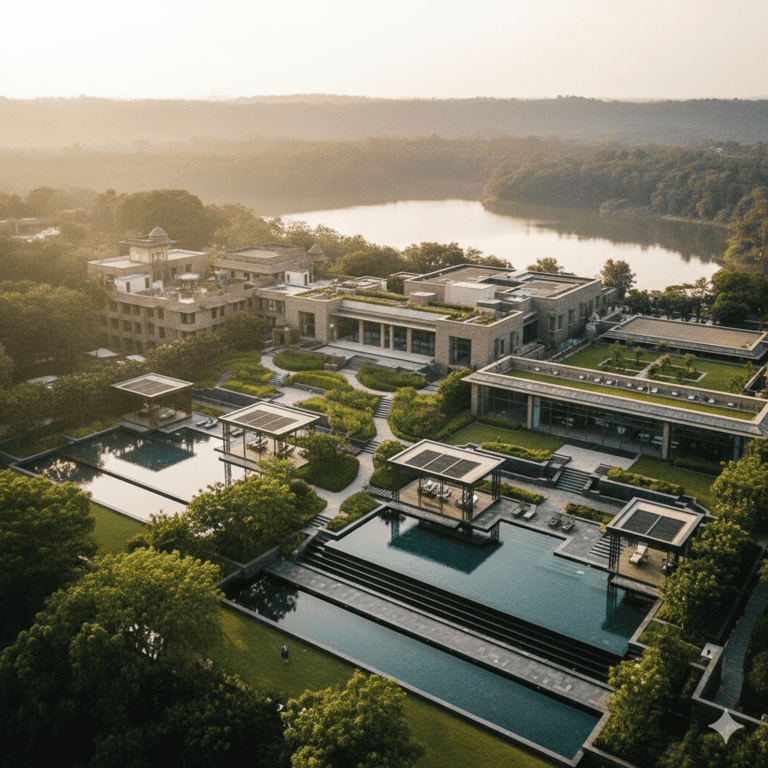
Advanced wellness and luxury longevity resorts operate with higher capital intensity but deliver differentiated pricing power and global demand. These models rely on deep personalization, longer programs, and integrated medical or longevity offerings.
Performance data shows stable occupancy, strong ADR uplift, and predictable long-term returns when positioning and execution are disciplined.
Key Focus Areas
Capex ranges INR 45 lakh to INR 2.5 crore per key depending on model
Stabilized occupancy ranges 45–85 percent across segments
EBITDA margins range 15–30 percent depending on complexity
ADR often 2x–5x midscale wellness benchmarks
Payback horizons range 5–10 years with premium asset appreciation
Marketing, AI Systems, and Demand Efficiency Impact on Wellness Resort Performance
Marketing and demand systems materially influence profitability. Case work shows that authority-led marketing, AI-enabled funnels, and partner-driven distribution significantly outperform OTA-heavy strategies.
By shifting demand toward direct and partner channels, wellness resorts improve conversion, reduce acquisition cost, and strengthen brand equity.
Key Focus Areas
Qualified wellness enquiries increased 2.5x–5.0x within 90–180 days
Enquiry-to-booking conversion improved by 20–60 percent
Direct and partner booking share increased by 15–35 points
Paid marketing spend reduced by 25–60 percent
Reputation scores and review velocity improved consistently
ROI Benchmarks and What Sustainable Wellness Resort Economics Look Like
Across markets and models, successful wellness resorts exhibit consistent economic patterns. These benchmarks provide realistic expectations for investors and developers evaluating wellness resort opportunities.
Key Focus Areas
Package share target: 50–75 percent of sold room nights
Wellness attach rate target: 60–85 percent of resident guests
Why do wellness resorts perform better than traditional resorts?
Wellness resorts outperform traditional leisure resorts due to longer stays, higher guest spending, and stronger on-site revenue generation, leading to better overall profitability.
How much more do wellness travelers spend compared to regular tourists?
Wellness travelers typically spend 35–55% more per trip compared to leisure travelers, making them a higher-value customer segment.
What is the average length of stay in a wellness resort?
Guests usually stay 5–14 nights, while medical wellness programs can extend up to 28 nights, significantly increasing revenue per guest.
What is the ROI of a wellness resort investment?
Wellness resort ROI depends on the model, but many projects achieve payback within 3.5 to 10 years, with strong EBITDA margins when properly executed.
What are the EBITDA margins for wellness resorts?
EBITDA margins typically range:
25–40% for boutique wellness resorts
15–30% for advanced or medical wellness models
What factors influence the cost of building a wellness resort?
The investment depends on multiple factors such as land location, resort scale, wellness positioning (luxury, premium, or nature-led), program complexity, design approach, and technology integration. A proper feasibility study is essential to align investment with realistic returns.
What occupancy rates can wellness resorts achieve?
Stabilized occupancy typically ranges:
55–75% for boutique models
45–85% depending on positioning and segment
Can an existing resort be converted into a wellness resort profitably?
Yes, resort-to-wellness conversions can increase occupancy by 10–30% and overall revenue by 45–65%, making it a highly effective strategy.
How much revenue can wellness programs generate in a resort?
Wellness programs significantly increase revenue, with on-site wellness spend reaching 1.5x to 3x compared to traditional leisure resorts.
What is the wellness attach rate in successful resorts?
Successful wellness resorts achieve 60–85% attach rates, meaning most guests participate in wellness programs.
What percentage of bookings come from wellness packages?
High-performing resorts generate 50–75% of bookings through packages, improving revenue predictability and cash flow.
How does marketing impact wellness resort performance?
Authority-led marketing and AI systems can increase qualified enquiries by 2.5x–5x and improve booking conversions by 20–60%.
Can wellness resorts reduce marketing costs?
Yes, by shifting to direct and partner-driven demand, resorts can reduce paid marketing spend by 25–60% while improving efficiency.
What is the difference between greenfield and brownfield wellness projects?
Greenfield: Built from scratch with full wellness integration
Brownfield: Existing resorts converted into wellness destinations for faster ROI and lower risk
Are luxury and medical wellness resorts more profitable?
They require higher investment but offer higher pricing power, global demand, and long-term asset appreciation, making them attractive for long-term investors.
What defines a successful wellness resort financially?
A successful wellness resort achieves strong occupancy, high program participation, diversified revenue streams, and consistent EBITDA margins with predictable payback timelines.